
Feeding guide
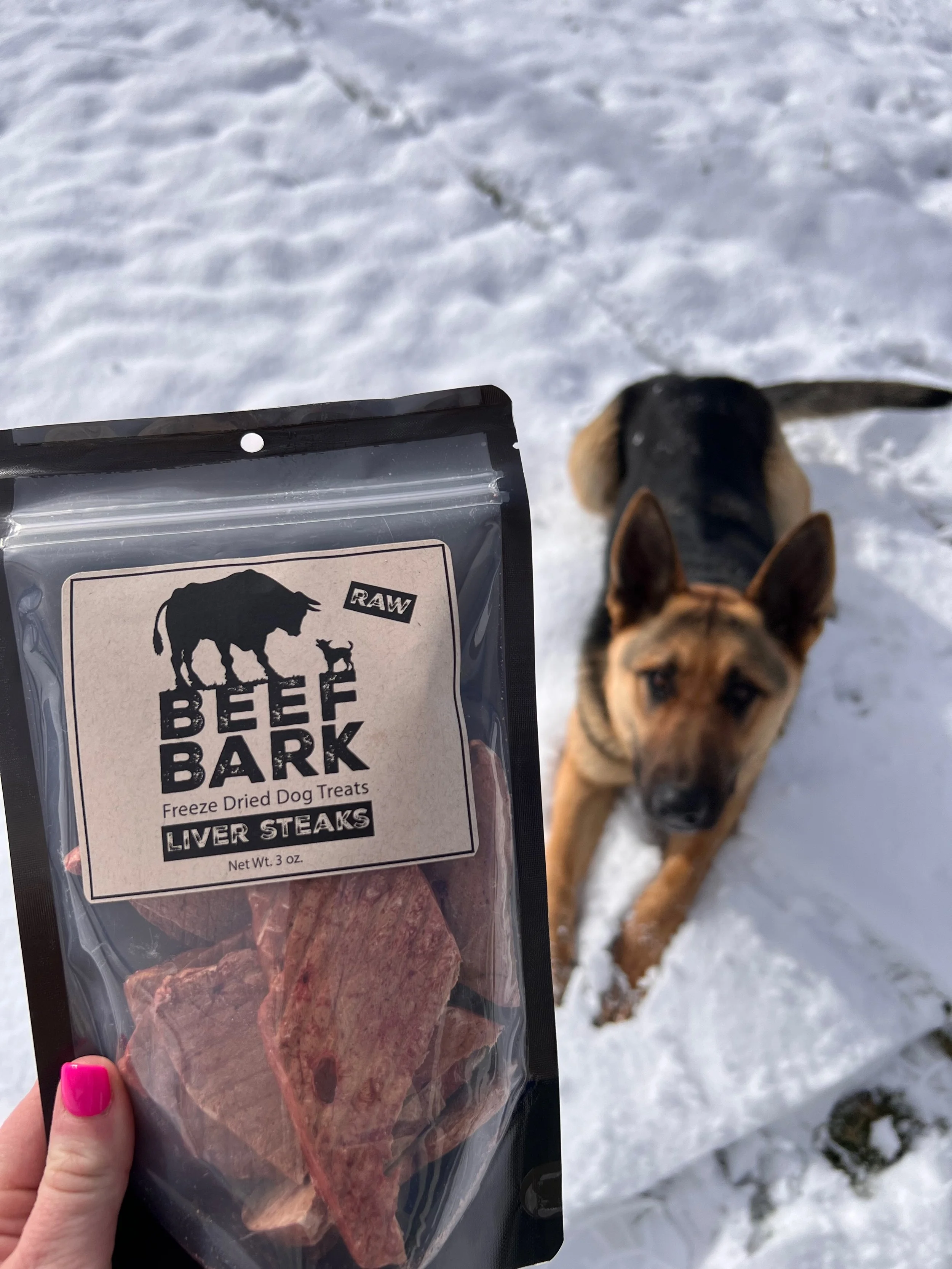
Beef Bark
raw freeze dried beef dog treats
Providing organ meats like liver, heart, tongue, and kidney isn't just about "treating" a dog—it’s about honoring the whole animal and utilizing the "forgotten" parts that are actually the most nutrient-dense portions of the carcass. On the farm, we see these as nature’s multivitamins, far superior to the synthetic powders found in commercial dog treats.
By using raw freeze-drying, we lock in those living enzymes and vitamins that high-heat processing (like canning or baking) usually destroys.
1. Beef Liver: The "Nature's Multivitamin"
From a producer’s view, the liver is the gold standard. It is the storage site for the most critical fat-soluble vitamins.
Vitamin A (Retinol): Crucial for the "working dog" vision and immune defense.
Heme Iron: Highly bioavailable, ensuring your dog has the stamina for a full day of activity.
Copper & Zinc: These support healthy skin and a thick, weather-resistant coat, which is vital for dogs that spend time outdoors.
2. Beef Heart: The Muscle Fuel
Technically a muscle but classified as an organ, the heart is a powerhouse of energy-producing nutrients.
Taurine: Essential for cardiac health. Farmers value this because it keeps a dog’s "engine" running strong into their senior years.
CoQ10: A potent antioxidant that aids in energy metabolism and recovery after exercise.
Natural Phosphorus: Supports bone structure and cellular repair.
3. Beef Kidney: The Filter & Detoxifier
The kidney provides a unique set of nutrients that help keep a dog’s internal systems clean.
Selenium: A trace mineral that supports thyroid function and helps fight oxidative stress.
Vitamin B12: Vital for the nervous system and the production of red blood cells.
Diamine Oxidase (DAO): Interestingly, kidney is known to help dogs with seasonal allergies by helping them process histamines more effectively.
4. Beef Tongue: The Healthy Fat Source
While often overlooked, tongue is a dense, lean muscle that offers a different textural and nutritional profile.
Essential Fatty Acids: Higher in healthy fats than other muscle cuts, providing long-lasting energy.
Zinc & Potassium: Supports muscle function and helps prevent cramping in active dogs.
Palatability: From a farmer's eye, tongue is often the "reward" cut because of its rich flavor that even the pickiest dogs won't turn down.
Why "Freeze-Dried" Matters to the Farmer
When we freeze-dry these organs, we are essentially "pausing" the meat at its peak freshness.
Preservation: It removes moisture without heat, retaining 97% of the original nutrients and enzymes.
Bioavailability: Unlike synthetic supplements, these nutrients are "whole-food," meaning the dog's body recognizes and absorbs them instantly.
Sustainability: It respects the life of the steer by ensuring no part of the animal goes to waste, reflecting a true "nose-to-tail" philosophy.
How to feed
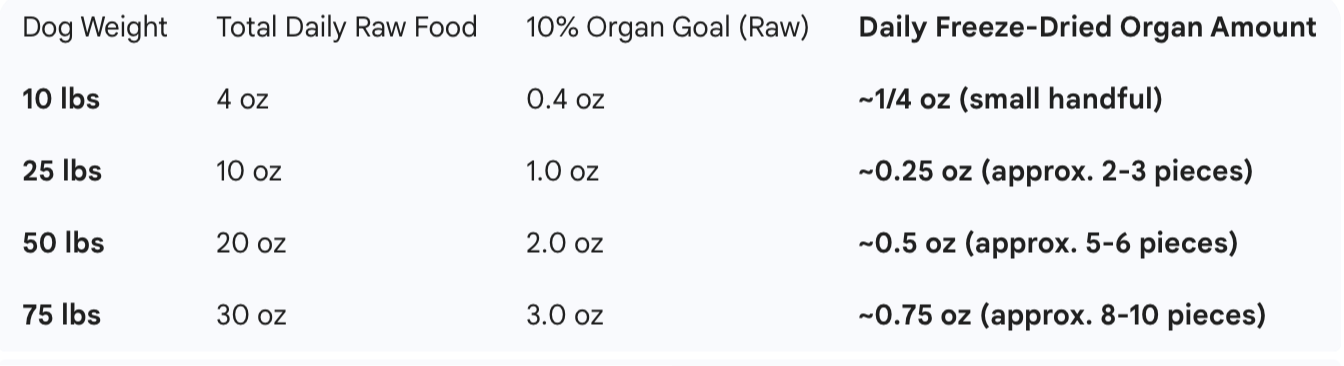
To get the portions right, we use the 80/10/10 rule (80% muscle meat, 10% bone, and 10% secreting organ). When working with freeze-dried organs, remember they are highly concentrated—usually about 4 times more potent by weight than raw because the water has been removed.
Here is how to calculate the daily "sweet spot" for your dog.
1. Calculate Daily Total Intake
A typical adult dog eats about 2.5% of their body weight in raw food per day.
2. The 10% Organ Rule
Within that total, only 10% should be organs.
5% Liver: (The "secreting" organ limit to avoid Vitamin A overdose).
5% Other Organs: (Kidney or Spleen).
Note: Heart and Tongue are technically muscle meats. You can feed more of these, but because they are rich, we usually count them toward the "muscle" portion (the 80%).
Farmer’s Feeding Tips:
The "Poop Test": As a farmer, we watch the "output" to know if the "input" is right. If your dog’s stool gets loose or dark, you’re feeding too much liver/organ. Back off slightly until it firms up.
Richness Warning: Heart and tongue are very rich in fats and minerals. While they aren't "secreting organs," introducing them too fast can cause an upset stomach. Start with one piece a day.
Liver is the Limit: Never exceed 5-7% of the total diet with liver. It is so nutrient-dense that "more" is not "better" in this case.